

Energy transition reshapes Oman's hydrocarbons sector as producers focus on efficiency and emissions

OBG Logo
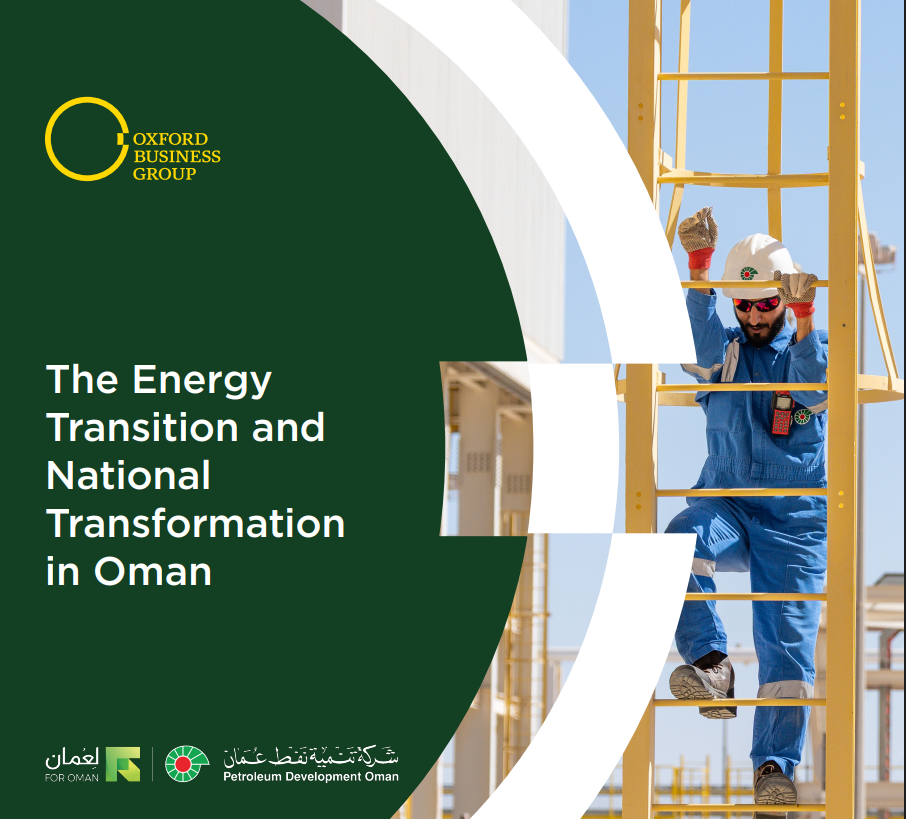
OBG and PDO release a report examining how operational efficiency, digitalisation and emissions management are supporting long-term competitiveness
For hydrocarbon-dependent economies such as Oman, this means maximising the value of existing resources while also pursuing economic diversification and developing lower-carbon industries”
MUSCAT, OMAN, October 18, 2026 /EINPresswire.com/ -- Energy transformation is reshaping how hydrocarbons are produced, managed and assessed globally, placing greater emphasis on emissions intensity, operational efficiency and governance alongside energy security. For resource-rich economies such as Oman, this creates an opportunity to strengthen the competitiveness of existing production while advancing national sustainability objectives and long-term economic diversification.— Aflah Al Hadhrami, Managing Director of PDO
Titled ‘The Energy Transition and National Transformation in Oman,’ the new report, produced by Oxford Business Group (OBG) in partnership with Petroleum Development Oman (PDO), examines how the sultanate is aligning its energy sector with Oman Vision 2040 and national net-zero ambitions. It explores the role of operational transformation, digitalisation, emissions management and institutional coordination in supporting lower-carbon hydrocarbons production, renewable energy deployment and broader economic development.
The publication assesses how global market expectations are changing the competitive environment for oil and gas producers. While hydrocarbons remain central to fiscal stability, energy security and industrial development in Oman, environmental performance is becoming increasingly relevant to market access, financing conditions and capital allocation. Lower emissions intensity, flaring reduction, methane management and credible reporting are therefore assuming a more prominent role in shaping long-term resilience across the sector.
Digital technologies feature prominently in the report. Real-time operational information, artificial intelligence and advanced analytics are enabling operators to move beyond periodic reporting towards more continuous, data-driven performance management. This can help identify rising costs, underperforming assets and areas requiring intervention, while supporting greater operational efficiency and more informed decision-making.
The report also considers the importance of governance, workforce development and cross-sector coordination in delivering measurable progress. National strategies and institutional
frameworks provide the basis for aligning operational priorities with longer-term objectives, while international partnerships and technology adoption can support improvements in emissions reduction, efficiency and diversification.
The publication includes an interview with Aflah Al Hadhrami, Managing Director of PDO, who outlines the challenge facing hydrocarbon producers as they balance cost competitiveness with evolving sustainability expectations.
“Producers face the dual challenge of maintaining cost competitiveness while meeting increasingly stringent emissions-reduction commitments,” Al Hadhrami explains. “For hydrocarbon-dependent economies such as Oman, this means maximising the value of existing resources while also pursuing economic diversification and developing lower-carbon industries. Both processes require significant capital, technological investment and, above all, long-term commitment for greater sustainability,” he added.
Dana Agarbicean, OBG’s Country Director for Oman, said the report highlights how operational performance is becoming more closely linked to broader national competitiveness.
“This report highlights that Oman’s energy transition is not solely defined by the deployment of new energy sources. By strengthening operational efficiency, applying digital technologies, improving emissions management and reinforcing coordination across institutions, the sultanate is enhancing the competitiveness and resilience of its hydrocarbons sector while supporting its wider sustainability and diversification objectives,” she said.
The Energy Transition and National Transformation in Oman is now available to view and download at https://oxfordbusinessgroup.com/reports/exploring-the-role-of-energy-transformation-in-oman-operational-and-economic-resilience-research-analysis-focus-report/
Marc-André de Blois
About Oxford Business Group
Visit us on social media:
LinkedIn
Facebook
YouTube
X
Legal Disclaimer:
EIN Presswire provides this news content "as is" without warranty of any kind. We do not accept any responsibility or liability for the accuracy, content, images, videos, licenses, completeness, legality, or reliability of the information contained in this article. If you have any complaints or copyright issues related to this article, kindly contact the author above.
